
Chariot is a frontier AI research lab, one of the four teams selected under the IndiaAI Mission to build the country’s foundation models.
Teaching machines to think in speech.
We build audio native models that listen, reason and speak directly. Our first models, Chariot-1 TTS and Chariot-1-ASR Realtime, are live in English, Hindi, Tamil, Bengali and more.
Audio is a modality, not a domain.
Text is a modality for many domains: Code, Mathematics, Law, Science, Writing. Audio should be treated with the same generality. Speech carries meaning not only in words, but in timing, rhythm, emphasis, silence, accent, emotion, and social intent. Signal text never sees.
Reasoning changed text.
Text models changed when they learned to do more than predict the next token: to plan, verify, revise, and adapt before answering. Reasoning turned generation into problem-solving.
Speech reasoning is next.
Speech is still split across transcription, synthesis, dubbing, and voice-agent pipelines. Each handles one part of the interaction. Chariot is building toward models that reason across meaning, delivery, timing, and action in one speech-native system, a model that reasons not only about what to say, but about how to say it, and when to say nothing.
What speech
reasoning means
A speech reasoning model is not a transcript passed to a language model and read aloud again.
It works with the spoken interaction itself: what the speaker means, where uncertainty or emphasis matters, when to interrupt, pause, or clarify, and how the response should sound.
The goal is general capability in speech: to converse, narrate, teach, summarize, rewrite, edit, perform, and act, without building a separate pipeline for every task.
From the team that brought you these



Shah Rukh Khan, answering cricket questions live

Shah Rukh Khan, answering cricket questions live
A World Cup bot that answered fans in his voice, from twenty minutes of recording.
Watch on X ↗
600,000 birthday songs, each sung to a different name

600,000 birthday songs, each sung to a different name
Our team built the system that sang every one.
Watch the film ↗
A cloned celebrity voice, built to teach people how scams sound

A cloned celebrity voice, built to teach people how scams sound
Our team built the voice for a fake endorsement. The campaign then revealed itself and explained the trick. Silver Lion at Cannes, Grand Prix at Goafest.
Watch the film ↗
Arshad Warsi, voicing ads that shopkeepers made themselves

Arshad Warsi, voicing ads that shopkeepers made themselves
On Shikhar, HUL’s eB2B platform, a retailer turns one photo into a finished promo film in his voice. Over one lakh ads generated.
Watch the film ↗
Lullabies with the baby’s name sung into the melody

Lullabies with the baby’s name sung into the melody
Parents typed a name. Our team built what sang it back, inside the vocal line rather than over it.
Watch the film ↗
Vedang Raina, greeting viewers differently by time of day

Vedang Raina, greeting viewers differently by time of day
200 variants by time of day and viewer interest: one actor, generated rather than reshot.
Read the campaign story ↗
Hrithik Roshan and Ranveer Singh, naming your local restaurant

Hrithik Roshan and Ranveer Singh, naming your local restaurant
Thousands of city-level variants. Zomato took number one brand awareness in the target markets.
Watch the film ↗
A first step toward speech reasoning: Chariot TTS
Our first public model is a speech generation model that
understands what the text is trying to say, not just how to
pronounce the next token.
Try Chariot TTS

Write naturally.
Write the way you think. Chariot uses context to shape the delivery.
CHARIOT TTS
Your text
Psst, hey, shh, keep it down, the baby's finally asleep.
10k Credits remaining
//
115/2000
Voices
Say what you mean.
The model handles how to say it.
Traditional TTS models make you do part of the model’s job: expand numbers, spell out abbreviations, force punctuation, and add pronunciation hints.
Chariot is built for the text people actually write. It uses context to decide what should be spoken, and how.

Chariot says

“Order two zero four eight contains three items and ships tomorrow.”
Ryan
Male
0:06
Evaluated where
the bar is highest
We benchmark Chariot-1 TTS against the leading public
speech systems on English and Hindi. Every system runs
the same sentences through the same three-recognizer
ensemble, scored so a correct spoken form of written
text never counts as an error.
Accuracy on hard examples
Turning written forms into spoken ones: dates, currencies, URLs, units. 1,029 sentences written the way text actually arrives, judged on whether the model said them correctly.
- #1Customer service96.0%
- #1Technical & scientific95.6%
Ahead of all eight other systems. Higher is better.
Naturalness
How human the audio sounds, rated clip by clip (NISQA, 1–5).
Tied-first in English, first in Hindi. Higher is better.
Intelligibility on natural speech
Ordinary conversational sentences, the speech a product actually generates most of the time.
Lower is better. 98.3% of English words read correctly.
Latency
Median time from request to the first byte of audio, over the WebSocket endpoint.
Lower is better.
From generating speech to reasoning in speech
Chariot TTS and Chariot ASR are the first public steps.
The research direction is broader: models that reason in and about speech.
01
Generate
Natural speech from text, with context-aware delivery.
02
Understand
Speech models that hear more than words: prosody, emphasis, uncertainty, interruptions, emotion.
03
Converse
Low-latency speech-to-speech interaction with memory, turn-taking, and task understanding.
04
Reason and act
Models that can edit, role-play, teach, summarize, rewrite, and complete tasks natively in speech.
Latest from Chariot.
12 November 2026
Introducing Chariot-1-TTS-Multilingual
Text to speech in 11 Indic languages and English, with 50+ voices, code-mixing, instant voice cloning and context-aware pronunciation.
22 October 2026
Introducing Chariot-1-ASR Realtime
Real-time speech recognition for 10 Indian languages. It beats every system we tested, even the ones that wait for the whole recording.
7 October 2026
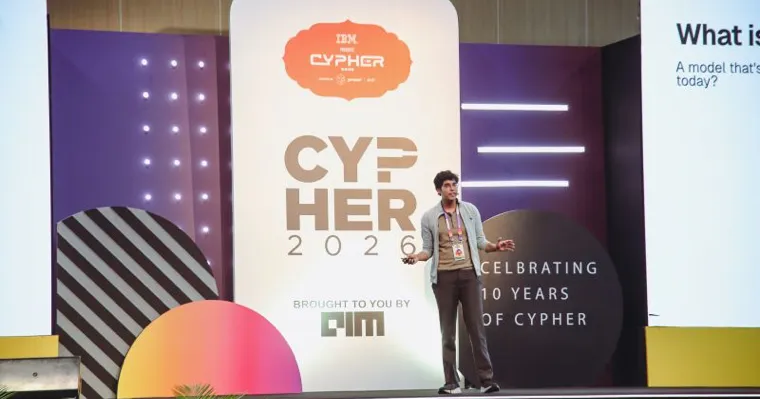
Chariot at Cypher 2026
Chariot showed its speech models at Cypher 2026 in Bengaluru, and co-founder Parth Sarthi gave a talk on what it takes to build frontier AI from India.
10 September 2026
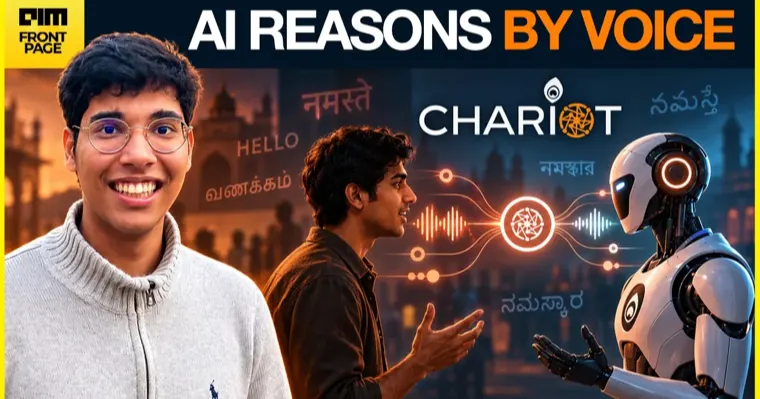
Inside Chariot: Parth Sarthi in conversation with AIM
Parth joins AIM Network to discuss speech-native reasoning, the nuances of spoken language, and building foundational AI models from India.
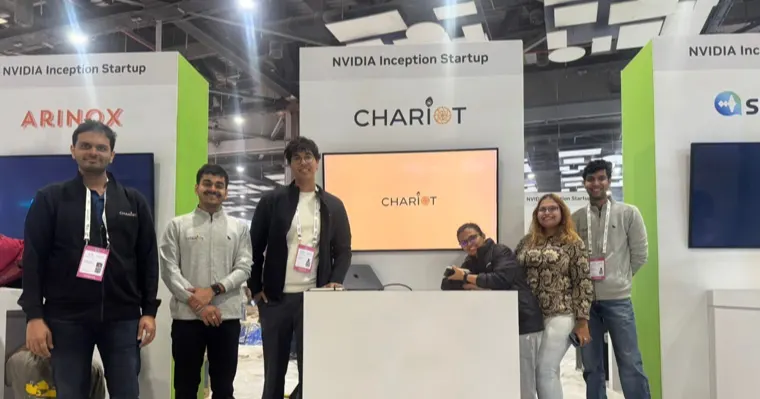
24 February 2026
Chariot at the India AI Impact Summit
A roadmap for the Speech Reasoning Model, a live research preview of the speech generation model, and two days of exactly the conversations the team was hoping for.
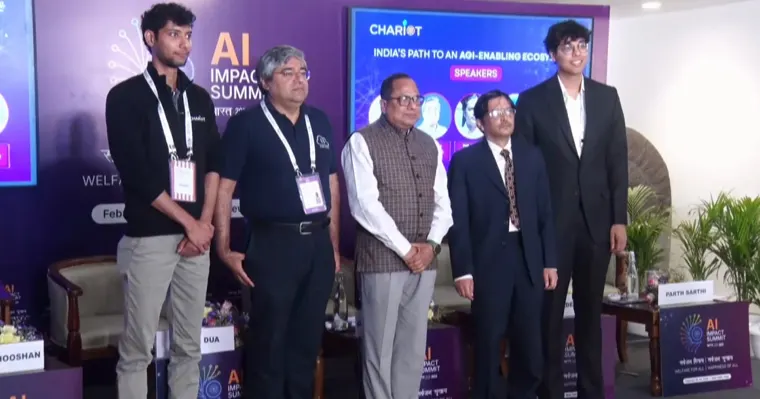
20 February 2026
India's Path to an AGI-Enabling Ecosystem: IndiaAI Summit
Chariot hosted a packed session at the India AI Impact Summit on what it takes to build an ecosystem capable of supporting frontier-scale AI research and sovereign foundational models in India.
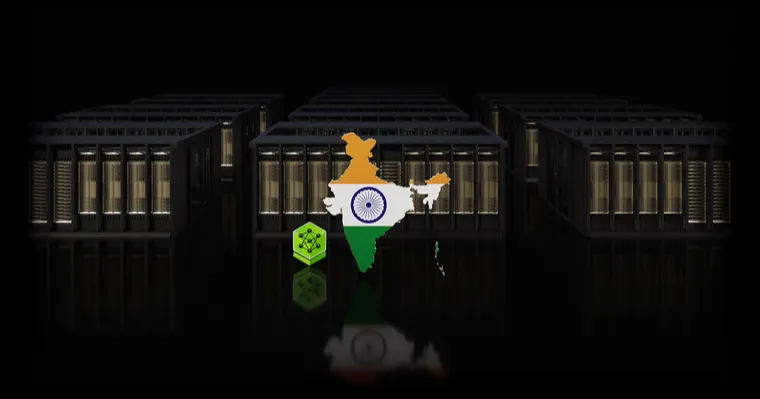
17 February 2026
Chariot x NVIDIA: Building Speech AI for the IndiaAI Mission
NVIDIA's “India Fuels Its AI Mission” features Chariot among the teams building India's foundation models, for its real-time text to speech on the NVIDIA NeMo framework.
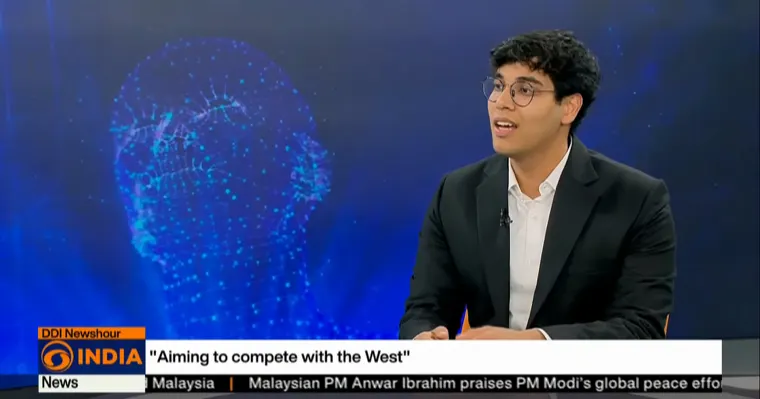
8 February 2026
Parth Sarthi's Interview on Doordarshan
Chariot co-founder Parth Sarthi sat down with Doordarshan to discuss Chariot's mission, the state of AI research in India, and building foundational AI models under the IndiaAI Mission.
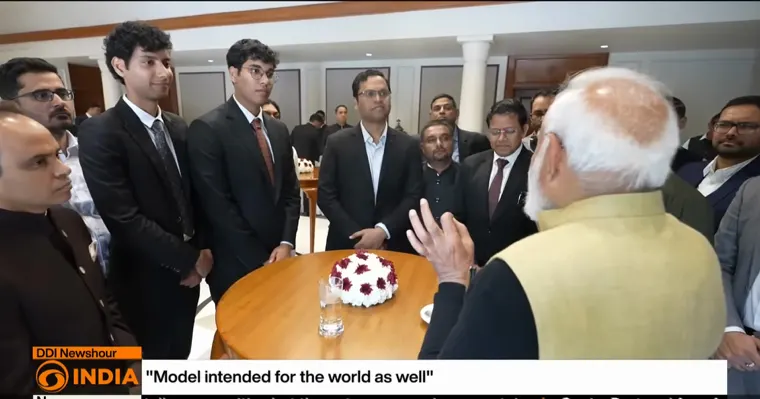
8 January 2026
Chariot Co-Founders Meet Hon. Prime Minister Narendra Modi
Chariot co-founders Parth Sarthi and Suvrat Bhooshan met with the Hon. Prime Minister of India, Shri Narendra Modi ji, at his residence and presented what they are building.

A research team built for foundation models
We are a frontier AI research lab headquartered in Delhi, with
experience across multimodal reasoning, distributed training,
foundational model research, and large-scale systems.
Led by co-founders Parth Sarthi and Suvrat Bhooshan
TEAM FORMERLY FROM


AI Research


IIT Delhi

IIT Bombay
QUANTITATIVE
HEDGE FUNDS
Help build the speech reasoning lab.
We are hiring researchers, engineers, designers, product builders, and operators to build native speech reasoning models from India.
FAQs
Speech reasoning is the research direction of building models that work with the full spoken interaction, not only a transcript. That includes words, timing, prosody, emphasis, uncertainty, interruption, context, and the delivery of the response.
Chariot TTS is our first public milestone toward that direction. It focuses on speech generation: turning written text, in English, Hindi, Tamil and more, into natural delivery. Our broader research extends beyond generation to speech understanding, conversation, reasoning, and action.
Generation makes important parts of the thesis measurable today: context-aware delivery, normalization, multilingual consistency, intelligibility, preference, and latency. It is a useful model in its own right and a foundation for broader speech-native systems.
The current release speaks English, in American, British and Indian accents, and the major Indian languages, from Hindi and Tamil to Bengali and Punjabi, across 50+ voices. More languages are on the way. The live voice catalogue and API documentation are the source of truth for model compatibility and availability.
We use blinded human preference tests, intelligibility checks, latency measurements, and normalization evaluations. Published results link to the complete protocol, model versions, prompts, language distribution, and uncertainty.
Use the interactive demo on this page or create an account on the Chariot platform. Developers can generate and stream speech through the API.