Parth Sarthi's Interview on Doordarshan
Chariot co-founder Parth Sarthi sat down with Doordarshan to discuss Chariot's mission, the state of AI research in India, and building foundational AI models under the IndiaAI Mission.
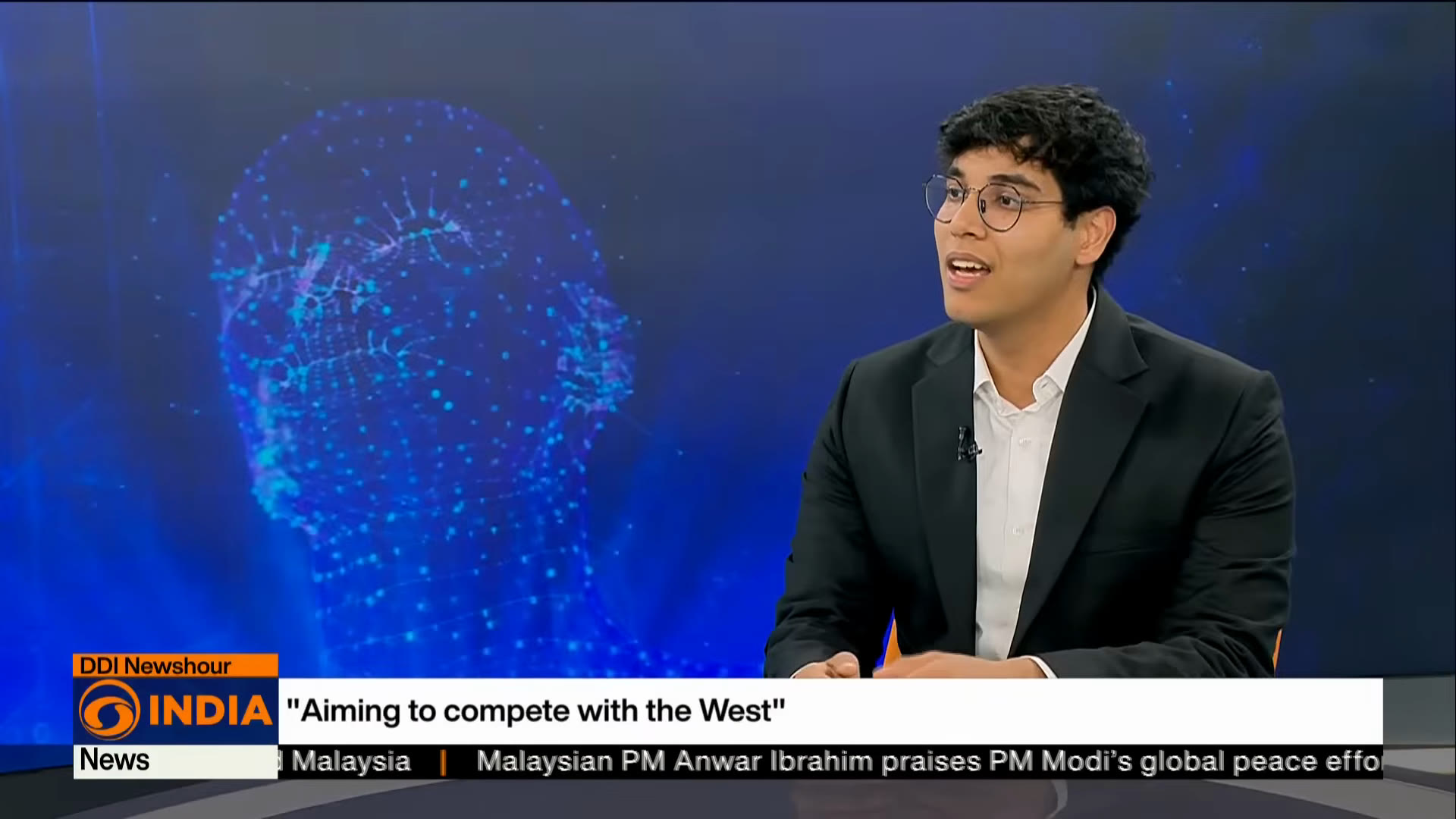
The segment aired on DD News as “India Builds Empathetic AI: Chariot's Voice-First Breakthrough”, recorded in the run-up to the India AI Impact Summit. Over eleven minutes, Parth walks through what Chariot is building, who is building it, and why the work is happening from India. The full conversation is above.
A voice-first country
Chariot, he explains, is a frontier AI lab based in Delhi NCR, building speech models. The models of the West work mostly through text, but India is a voice-first country. The winning factor is that the model can actually reason: it thinks about what is being said and how it should be said, rather than reading out whatever it was handed.
His example is a teacher. What separates a good teacher from an average one is delivery: modulating tone and pace with the moment, going fast, going slow, holding a class so well you don't notice the time. An emergency advisory needs audible seriousness, so listeners know to act now. A tour guide should tell a story with the flair of someone who is from there. Chariot's models are built to understand that difference and speak accordingly.
We're not playing catch-up with any of the models in the West. We're actually aiming to pioneer this technology out of India.
Parth Sarthi
Speech reasoning, he notes, has not been done anywhere. Both founders bring frontier-lab experience home: Suvrat studied at Stanford, spent two years at Facebook AI Research, and founded the AI-avatar company GAN Studio; Parth, also Stanford-trained, worked on multimodal reasoning for Gemini at Google DeepMind. Around them is a team of research engineers from the IITs and hedge funds, with data annotators from all around India building the data.
Made in India, for the world
The first model starts with the top ten Indian languages and English; the plan reaches all 22 official languages of India and the top ten global languages beyond them. It rolls out in India first, though as Parth puts it, the model is intended for the world as well. The compute that was once out of reach now exists through the IndiaAI Mission, and he calls the Budget's 21-year tax holiday for AI data centres a fantastic move, compute being the biggest bottleneck to building such models.
Text to speech is only the first step: the lab intends voice-first models that can do everything text assistants do today. Asked whether India can emerge as a frontier player, he closes with the larger claim: India should not just catch up. It can pioneer research from here, and even teach others how to build better AI.